
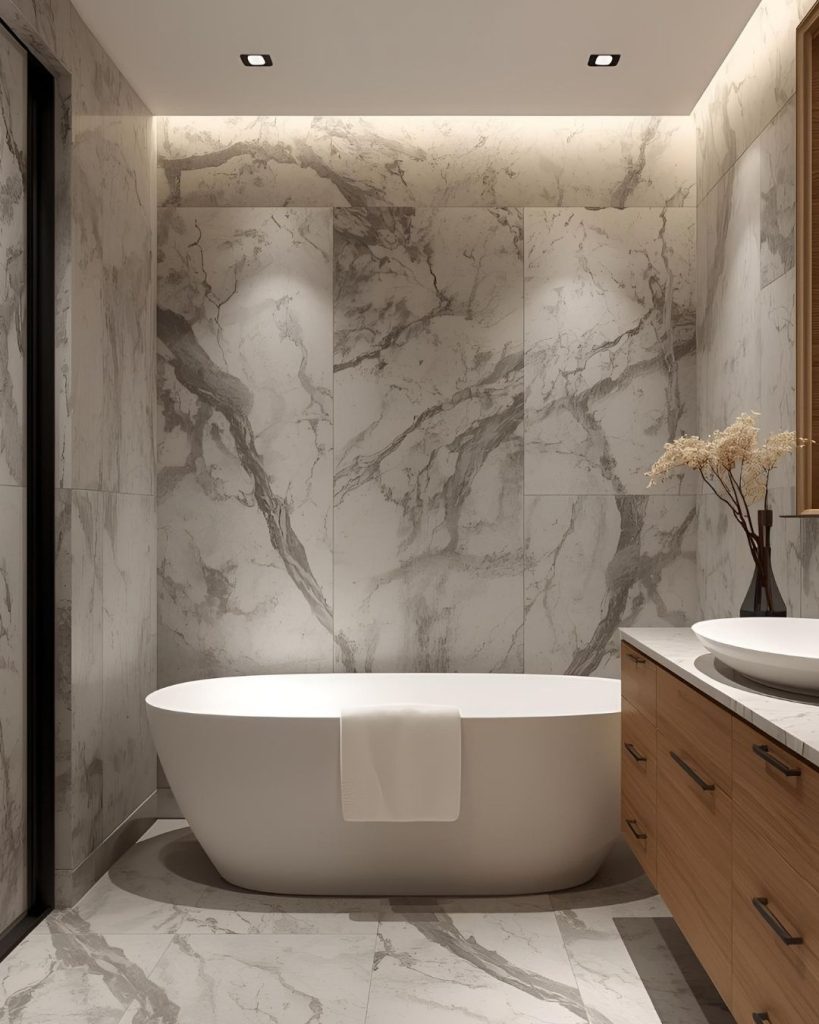
How Much Does a Bathroom Renovation Cost in High Wycombe?
A bathroom renovation ranks among the most searched-for home improvement projects in the High Wycombe area — and the cost question is almost always the first one people want answered. The problem is that bathroom renovation prices span an enormous range, and generic national figures rarely reflect what you will actually pay from a local fitter in this part of Buckinghamshire.
High Wycombe’s housing stock is varied enough to generate demand across the full cost spectrum. The larger detached properties in Tylers Green, Penn and Loudwater tend towards higher-specification renovations with premium sanitaryware and bespoke tiling. The substantial stock of 1930s and post-war semis across Downley, Micklefield and Terriers represents the more typical family bathroom renovation — a functional space that needs modernising without necessarily changing the layout. Newer builds on the edges of the town around Handy Cross and the Gomm Valley development areas bring a different set of considerations around specification and accessibility.
This post gives you a realistic picture of what a bathroom renovation costs in High Wycombe, what the main variables are, and what the process looks like from strip-out to finished room.
What Does a Bathroom Renovation Cost in High Wycombe?
Prices vary considerably depending on the scope of work, the specification of materials, and how much the plumbing layout needs to change. For the High Wycombe market, realistic installed costs from a reputable local bathroom fitter currently look like this:
- Basic refresh (new suite, retile, minimal plumbing changes): £3,800–£6,800
- Mid-range renovation (full strip-out, new suite, full retile, updated plumbing): £7,000–£13,000
- Higher specification renovation (reconfigured layout, premium suite, walk-in shower or freestanding bath, underfloor heating): £13,000–£24,000+
- Full luxury renovation (bespoke design, high-end finishes, structural work): £24,000–£45,000+
These are fully installed prices covering labour, materials, sanitaryware, tiling and all associated trades. They are based on a standard family bathroom of roughly 4 to 6 sqm. En-suites sit towards the lower end of each bracket given their smaller floor area. Larger bathrooms, or those being formed from a bedroom as part of a reconfiguration, will exceed these figures.
High Wycombe sits at the higher end of the Buckinghamshire market for trade labour costs, reflecting its position within the broader commuter belt west of London. Rates here are above more rural parts of the county and above towns further north, though below the premium charged in the Chiltern villages and considerably below Central London. For HP10 to HP13 postcodes and the surrounding area, the figures above are a fair reflection of current local pricing.
What Drives the Cost Up or Down?
How Much the Plumbing Needs to Change
The extent of the plumbing work is the single biggest variable in any bathroom renovation cost. Keeping the WC, basin and bath or shower in their existing positions — so that supply and waste pipes can be reused or extended only slightly — keeps costs down. Reconfiguring the layout so that fixtures move to new positions requires re-routing pipework, and moving a soil pipe is the most expensive single change you can make in a bathroom.
Soil pipes are large diameter, gravity-fed, and need to maintain the correct gradient to function properly. On the older properties in central High Wycombe and the pre-war terraces around the town centre and Castle Street area, the existing waste arrangements can be awkward to work around and not always positioned where a modern bathroom layout would ideally want them. A good plumber will assess the existing pipework before committing to a layout and advise on what is practical within the constraints of the building.
Tiling — Material and Layout Complexity
Tiling is where bathroom renovation costs can diverge most dramatically between two otherwise similar projects. It is both a significant materials cost and a significant labour cost, and decisions made at the specification stage have a large effect on the final figure.
Large format tiles — anything from 600mm x 600mm upwards — require a more precisely prepared substrate, generate more waste through cutting, and take longer to lay than standard format tiles. The skill level required is higher, and the margin for error is smaller. Smaller mosaic tiles take considerably longer per square metre than larger formats. Feature panels, recessed niches and mixed tile layouts all add time and complexity.
On materials, the range from standard ceramic to large format Italian porcelain to hand-finished natural stone covers an enormous price span. The tile budget alone can range from £15 per square metre for a basic ceramic to £150 per square metre or more for premium stone. For a standard High Wycombe family bathroom of 5 sqm with walls tiled to ceiling height, that difference in tile specification alone represents a cost variance of several thousand pounds before any labour is considered.
Sanitaryware Choice
The suite — WC, basin, bath or shower tray, taps and shower fittings — accounts for a meaningful share of the overall budget and spans a wide range of price points. A solid mid-market suite from an established UK or European manufacturer costs £900–£2,500 for the main components. A premium specification with a wall-hung WC, concealed cistern, freestanding bath and designer taps can run to £6,000–£18,000 for the sanitaryware alone before installation is factored in.
For the larger properties in Penn, Tylers Green and Seer Green, where bathrooms are often being renovated as part of a broader interior project, sanitaryware specification tends to be the area where budget is most willingly spent. For a three-bedroom semi in Downley or Micklefield, a well-chosen mid-market suite installed to a high standard delivers an excellent result without requiring a premium budget.
Shower Enclosure vs Walk-In Shower vs Wet Room
The shower solution chosen has a significant effect on both cost and the finished aesthetic. A standard shower enclosure with a tray and glass screen is the most straightforward and cost-effective option. A walk-in shower with a low-profile tray and frameless glass panel costs more but creates a cleaner, more contemporary look. A full wet room — where the entire shower area is open with a graded floor to drain — requires the most involved waterproofing and floor build-up but is the premium option in terms of both appearance and ease of maintenance.
Wet rooms are increasingly popular in the larger High Wycombe properties, particularly where an accessible shower is preferable to a stepped tray. They require specialist tanking of the floor and walls before tiling begins, and the floor build-up to achieve the correct fall to the drain adds time to the programme. Budget a meaningful premium over a standard enclosure for a properly constructed wet room.
Underfloor Heating
Electric underfloor heating beneath bathroom tiles is one of the most cost-effective comfort upgrades available in a renovation. For a standard High Wycombe family bathroom, adding electric UFH typically costs £450–£950 including the thermostat, wiring and installation. It needs to go down before the floor tiles, so the decision needs to be made at the outset — retrofitting it later means lifting the floor tiles, which is a significantly more disruptive and expensive operation.
Water-fed underfloor heating connected to the central heating system is more expensive to install and generally only makes sense in larger bathrooms or as part of a broader heating system upgrade.
Access and Building Constraints
High Wycombe’s topography — the town sits in the valley of the River Wye with the Chiltern Hills rising steeply to north and south — means a proportion of its housing stock is built into slopes, with split-level layouts and restricted access that can affect how bathroom renovations are carried out. Properties on the hillside streets above the town centre and in areas like Totteridge and Bowerdean sometimes have bathrooms positioned in ways that make waste pipe routing or structural alterations more complex than in a straightforward flat-plot house.
For new builds and apartments, concrete intermediate floors are common, which changes how waste pipes can be re-routed. Penetrating a concrete slab to alter drainage is more involved than working with a timber floor void. In managed apartment buildings, building management rules may also require notification or permission before certain types of work begin.
What the Process Looks Like
A bathroom renovation in High Wycombe follows a consistent sequence regardless of the specification level.
Strip-out is the first stage — removing the old suite, tiles, flooring and any boxing or partition walls being changed. For a standard family bathroom, this typically takes a single day. Waste removal is a consideration in terraced or semi-detached properties where access to the rear is restricted.
First fix plumbing follows, re-routing or extending supply and waste pipes to the new fixture positions. If underfloor heating is being installed, the element goes down at this stage before any floor screed or build-up.
Waterproofing and substrate preparation follow, particularly in shower and wet room areas. The tanking membrane on floor and walls needs to be applied correctly and given time to cure before tiling begins — skipping or rushing this stage is the most common cause of long-term tile failure and water ingress.
Tiling typically takes two to four days for a standard family bathroom depending on tile size, layout and the amount of cutting required. It is the most skilled and most visible part of the job.
Second fix plumbing connects and commissions all the sanitaryware — bath, shower, WC, basin, taps and shower fittings. Electrical second fix covers the extractor fan, lighting, UFH thermostat and any towel rail or shaver socket connections.
Finishing — sealant, silicone beads, door rehang if needed, and final clean — brings the room to completion.
For a mid-range renovation in a standard High Wycombe family bathroom, the total on-site programme from strip-out to handover typically runs one to two weeks. Higher specification projects with more complex tiling, wet room construction or structural work take longer.
Getting a Quote in High Wycombe
If you are planning a bathroom renovation in High Wycombe, Beaconsfield, Marlow, Princes Risborough, Amersham or anywhere across south Buckinghamshire, we are happy to come out and look at the existing space, talk through what you want to achieve, and give you a clear quote based on the actual scope of the work. Get in touch to arrange a visit.